Title

A More Usable Website for a High-Traffic State Department

Project Summary
MN Department of Revenue
Featured Image
outside of the limestone building which houses the department of revenue
Project Overview

Minnesota Department of Revenue Drupal Redesign

The Department of Revenue (“Revenue”) manages the state’s revenue system and administers state tax laws. Revenue manages over 30 different taxes and collects over $20.5 billion annually.

The website is an important resource for thousands of Minnesota businesses and residents, needing to understand and comply with state tax laws while keeping up with law and policies.

Services Provided
Service Areas
Sections
MN Revenue webpages
Challenges

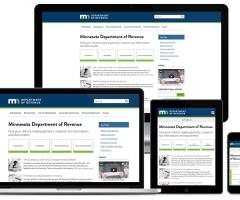
Even though highly trafficked, the Revenue website was in need of a complete overhaul. The design was ineffective and dated, and did not reflect changes to statewide branding. Web pages were not responsive or mobile-friendly. Site navigation was confusing, often redundant and too deep for users to find what they needed. The site did not pass accessibility standards, and the content was often difficult to understand.

Because the website is a critical resource for millions, the redesign needed to be completed while minimizing disruptions to the workflow of state residents, businesses and tax professionals.

Another challenge was coordinating our efforts among three distinct groups. The project involved developers and web professionals from Revenue, Acquia Electric Citizen.

MN Revenue webpages
Solutions

Improved Architecture and User Experience

While migration and site planning was underway, other members of our team began to work on the sitemap and an improved user experience. 

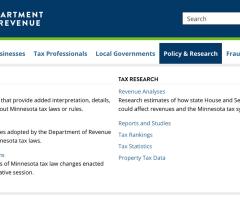
The nested, tabbed content of the current site was replaced with a series of content accordions and easier-to-scan headlines. An extensive dropdown menu made options easier for end users to locate, while site content itself was pared down and realigned along more consistent audience categories.

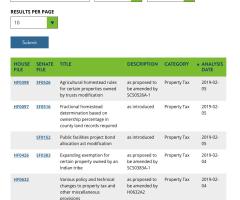
Unnecessary columns in data tables were eliminated while contextual filters were added to make finding data within each table easier. Users have the option of collapsing the sidebar section menu on a page, increasing their overall screen real estate as needed.

We emphasized plain-language and clarity for end users, making link choices easy to quickly understand and content easier to scan. 

Responsive and Accessible Design

The design was redone to complement state branding, using preferred colors and fonts while stripping away excess graphics and old stock images that didn’t add anything to the user experience. The overall look is clean, clear and business-like, matching the needs of the target audience.

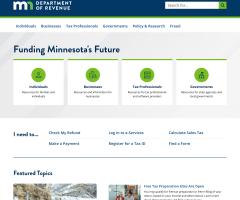
The home page kept the old site’s approach of highlighting the four primary audience groups, but with a simpler series of buttons, and a sidebar callout for the most popular tasks for users. Interior pages were designed to offer a more consistent layout, while making site content more visible, and not buried behind a series of tabs, or deeply nested pages.

Taking direction from the user experience team to reduce content overload, the new design allows site editors to focus each page on the primary messaging, while hiding away some secondary content. For example, the previous site had very lengthy lists of contact numbers on most pages.

The new site presents the most relevant contact information near the top, while hiding less relevant results (street address, hours, etc.) behind accordion buttons. Still available, but without the immediate information overload.

Site Migration and new CMS

Revenue’s previous site was powered by SharePoint, where thousands of tax-related documents were hosted and downloaded by site users. As part of the redesign, our team of developers created migration scripts to bring more than 12,000 PDF records dating to 1994 from Sharepoint into Drupal media entities. The full migration included 11 individual source file migrations, 28 total migrations, 36 individual metadata fields, and hundreds of potential field mapping combinations across the different data sets.

This migration required an extensive planning and documentation phase, with each migration mapped directly to the field level in a spreadsheet, along with a series of inline notes, flags, and warnings that helped guide the migration.

After successfully migrating all of this historical data into a new CMS (Drupal), all the website files are now fully categorized, filterable and searchable throughout their site using Search API and Apache Solr, and displayed in targeted lists throughout the site as needed.

Results
We migrated thousands of pages and documents from a previously static HTML site to a modern CMS (Drupal), while meeting performance, security and accessibility requirements for the build.

For over 5 years, Electric Citizen has continued to maintain and support the Revenue website while introducing site improvements and software enhancements.
12,000
PDFs migrated to new site