Authored on
Title

From Scope Creep to Project Roadmap

Featured Image
Two woman designers focusing on a screen
Lead-in

Managing Post-Launch Website Tasks

A website redesign is never a “one and done” project. It lays the foundation for an organization’s digital future. 

Throughout the process, new ideas will surface. This isn’t a problem. It’s inevitable. 

The challenge isn’t preventing scope creep entirely, it’s managing emerging ideas in a way that protects timeline, budget, and launch goals. In this post, we’ll walk you through our processes for seamlessly shifting new ideas into a post-launch roadmap.

Sections
1. Decide What’s Truly Launch-Critical

When new ideas appear mid-project, it can create stress for both agencies and clients. Without a clear framework, even small requests can disrupt timelines or inflate budgets.

We evaluate new requests using a simple set of questions:

  • Is this essential to the site’s primary function? If the website cannot fulfill its core purpose without it, the task is launch-critical.
  • If it’s critical but wasn’t included in the original scope, can we adjust budget, timeline, or both?
  • If neither budget nor timeline can shift, is there a comparable non-critical item that can move to post-launch instead?
  • If the request isn’t essential for day-one success, it becomes a post-launch task.

A common example is a site that needs basic search at launch, but enhancing search to extract content from PDF attachments becomes a post-launch task because it wasn’t included in the original scope and budget or timeline can’t shift.

Once something is designated as post-launch, it must be documented. We find that a shared spreadsheet works best, but even a running word doc will initially suffice. The key is capturing new ideas so launch stays on track without sacrificing meaningful improvements.

2. Define and Estimate Post-Launch Work

As launch nears, it’s time to finalize the details and scope of your post-launch tasks. Rough ideas need to evolve into defined tasks that can be estimated and prioritized. 

Post-launch work typically follows one of two paths:

Ongoing Support Contract

For organizations planning long-term support, post-launch tasks are often folded into a structured maintenance agreement. This creates continuity and ensures the site continues to evolve strategically.

Phase Two Project

If post-launch needs are significant, it may warrant a distinct Phase Two project with its own scope, budget, and timeline. 

Regardless of the approach, tasks should now be clearly defined and estimated so priorities, budgets, and staffing can be aligned.

We recommend consolidating all items into a structured tracking spreadsheet and scheduling a working session to review it with the client.  

3. Turn the List Into a Roadmap

Once the site launches, the focus shifts from collecting ideas to executing them.

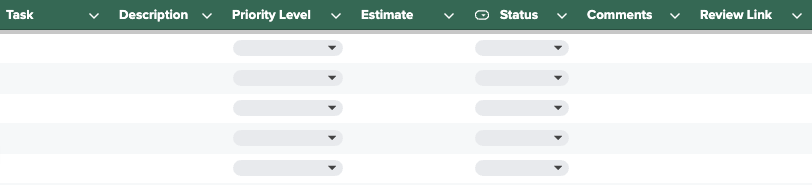
The tracking spreadsheet becomes the single source of truth for scope, priority, estimates, and status. We typically include:

  • Task Name
  • Description (including technical or design notes)
  • Priority Level (determined with the client)
  • Estimate
  • Status (e.g., Up Next, Client Review, Requires Definition)
  • Notes/Comments
  • Test links for Client QA
Zoomed out post-launch task spreadsheet

We’ve found that a 1.5-2 hour working session to review the full list with the client creates strong alignment. Walking through each task row by row helps confirm expectations, flag items that require additional scoping, and finalize priority levels.

While this requires upfront time, it saves far more time later. Having clear alignment means that teams can get started on the work right away.

4. Execution and Communication

With the spreadsheet finalized and priorities set, it’s now all about clear review processes and proactive communication.

A Clear Review Process

More complex features are reviewed in staging before release, while smaller updates may go live after internal QA. In either case, task status should be clear and up-to-date. When an item is ready, its status is updated to "Client Review" and a test link is added to the sheet. Weekly or bi-weekly email summaries keep the broader client team informed of progress.

Regular Status Reporting

In addition to task updates, consistent high-level reporting helps to maintain trust and prevent surprises.

These updates should include 'hours used' versus 'hours remaining', tasks awaiting client input, items requiring additional scope, and opportunities to reprioritize or allocate additional hours. 

Transparency helps you spot bottlenecks early and keep work moving.

A Better Way to Manage What’s Next

While every post-launch project is different, one principle holds true: structured decision-making reduces friction and stress.

Capture ideas, prioritize them intentionally, and execute with clarity.

If you're planning a redesign and want structure without rigidity, let’s talk.

About the Author

About the author

headshot of Emily

Emily is a senior project manager with Electric Citizen